There are two clocks in Puri. One is made of stone and has kept the same hour for nine hundred years; the other arrives and withdraws twice a day and remembers nothing. The town lives in the distance between them — between the temple that does not move and the sea that does nothing else. A walk across that distance, from one tide to the next.
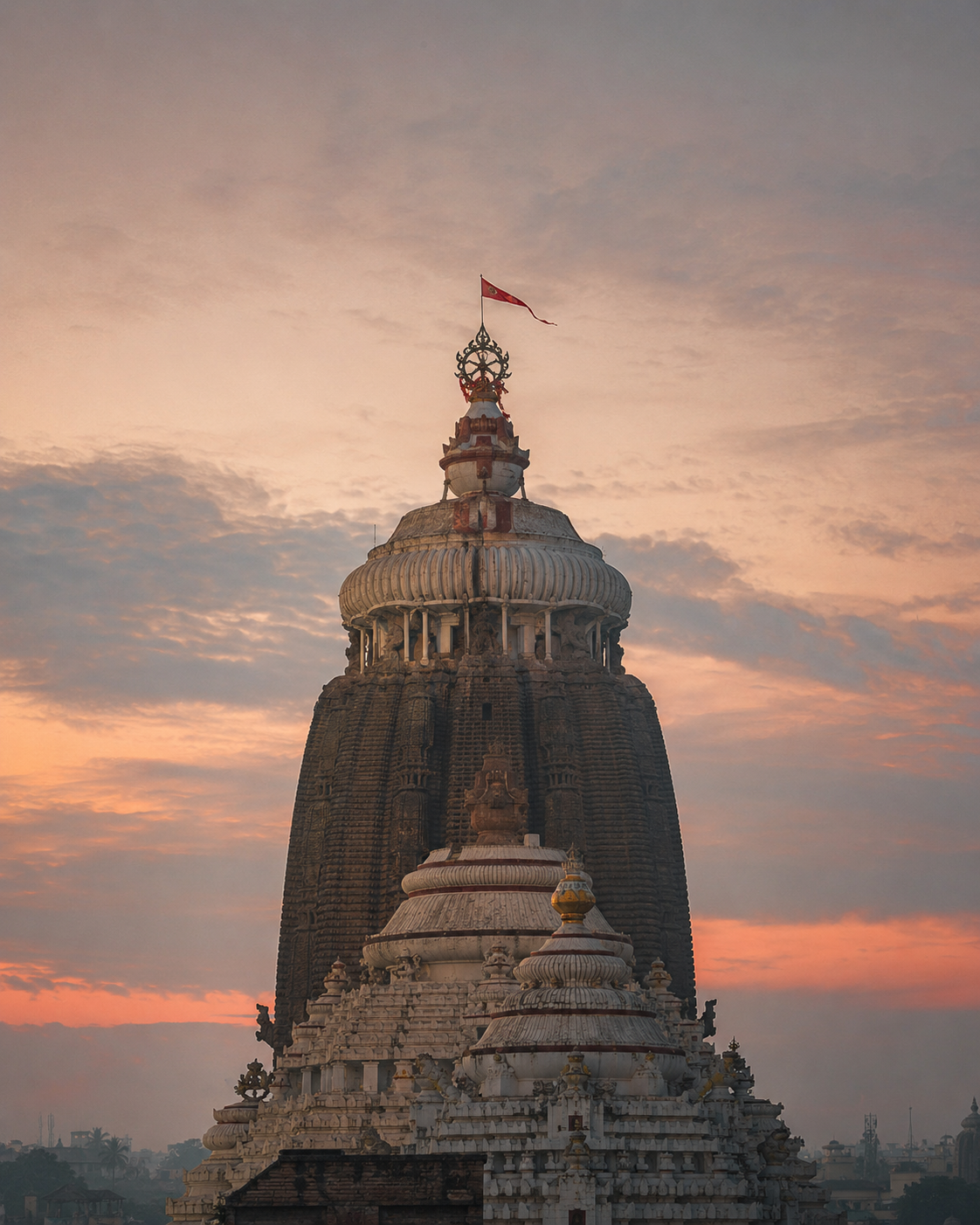
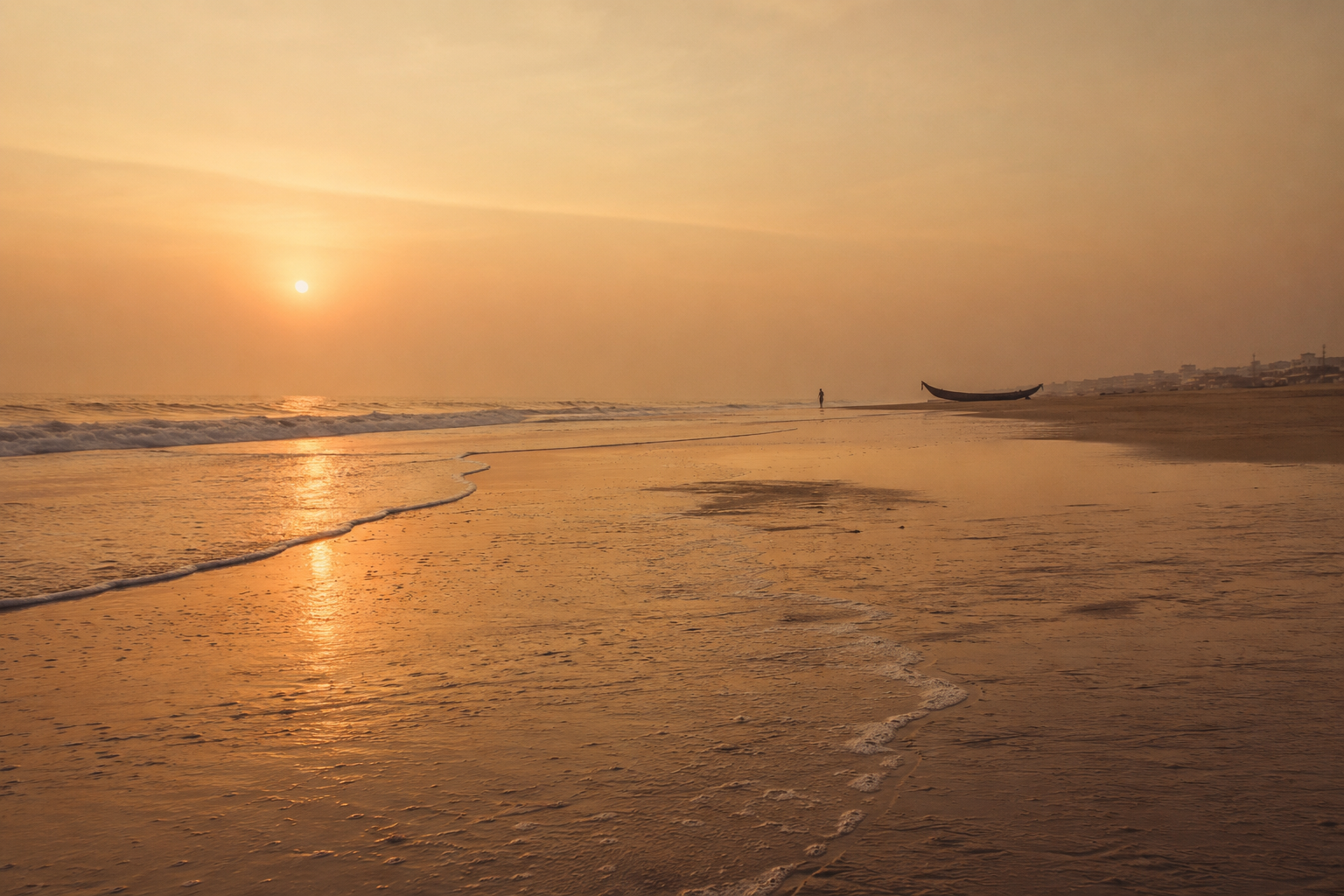
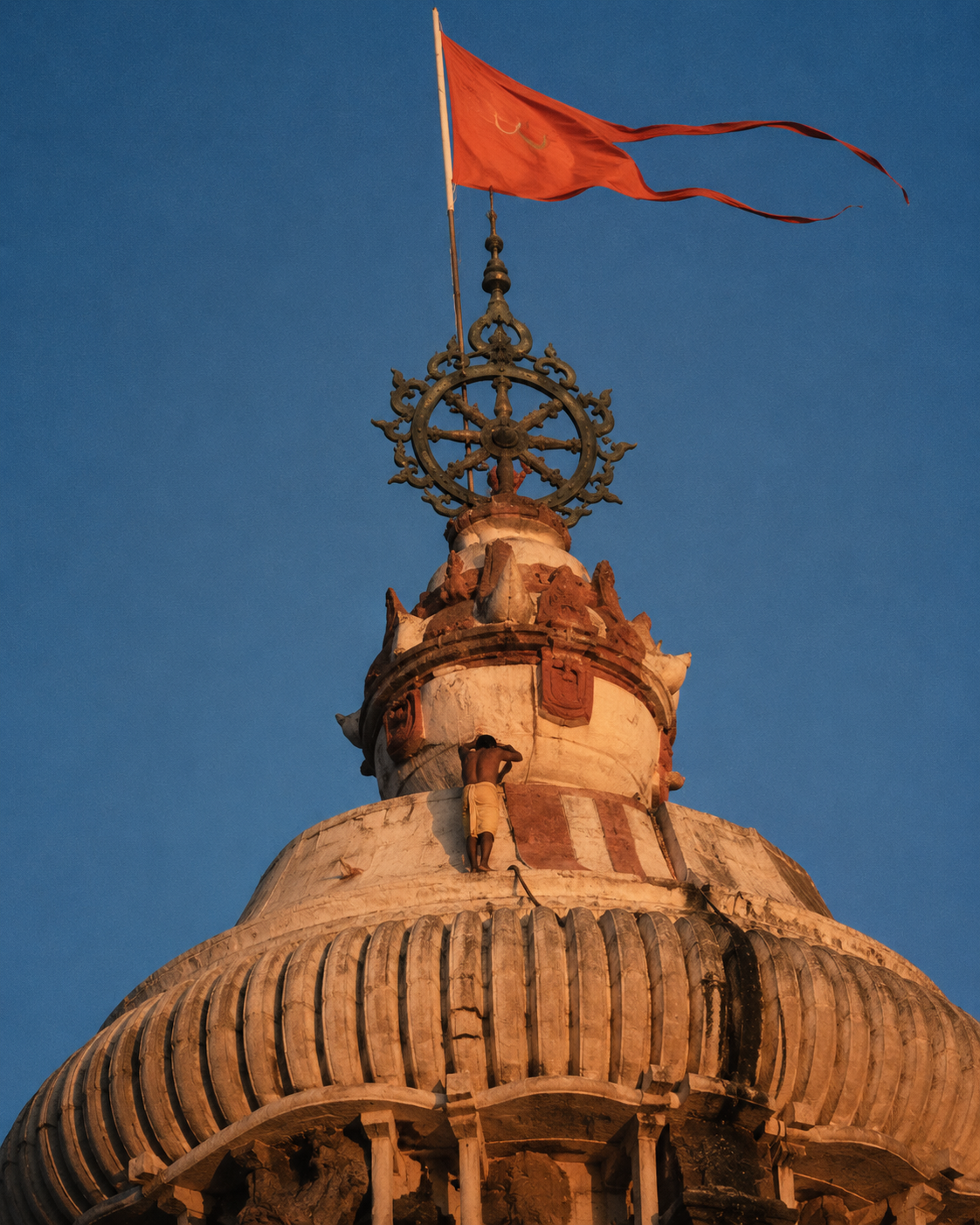
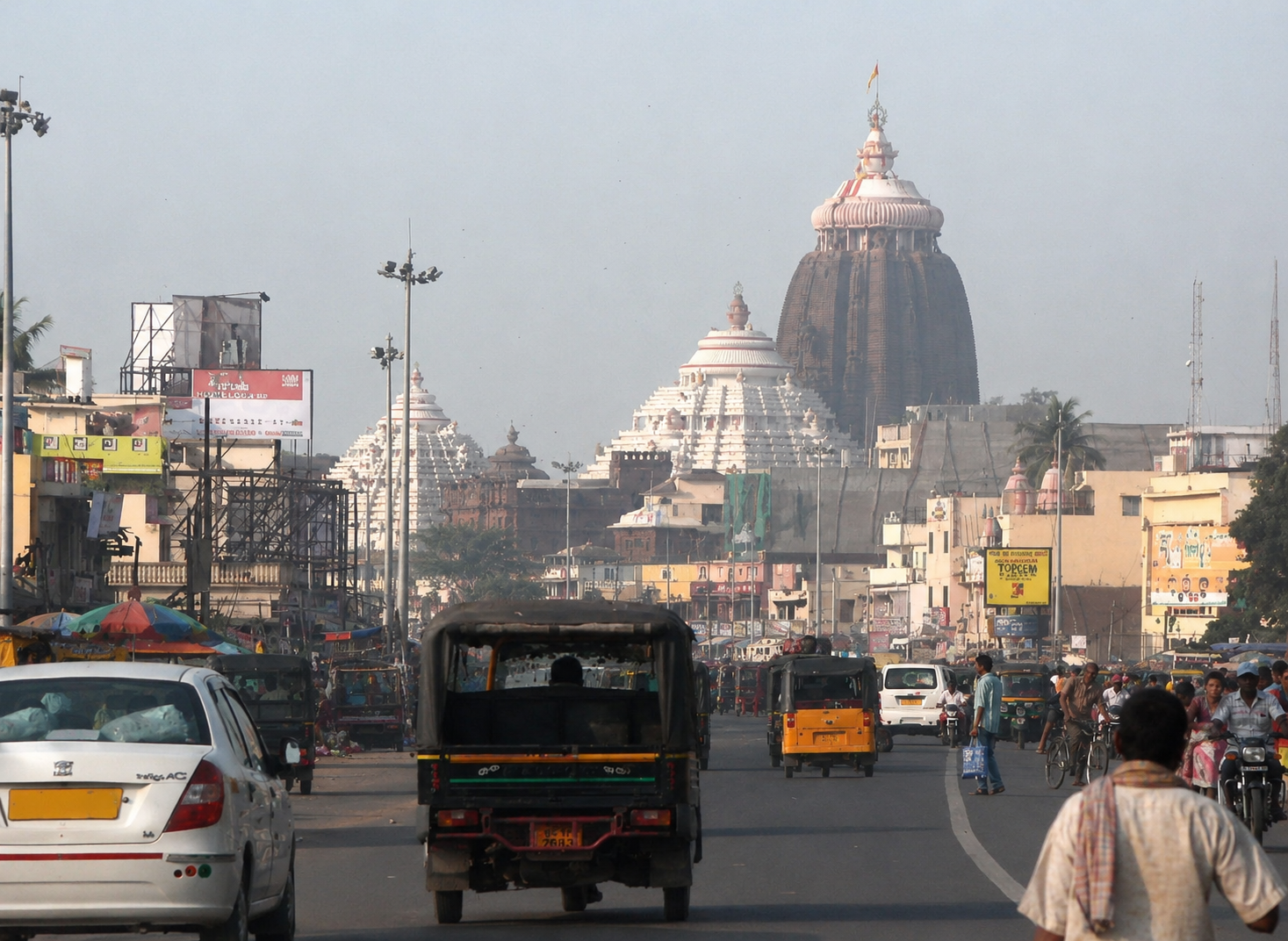
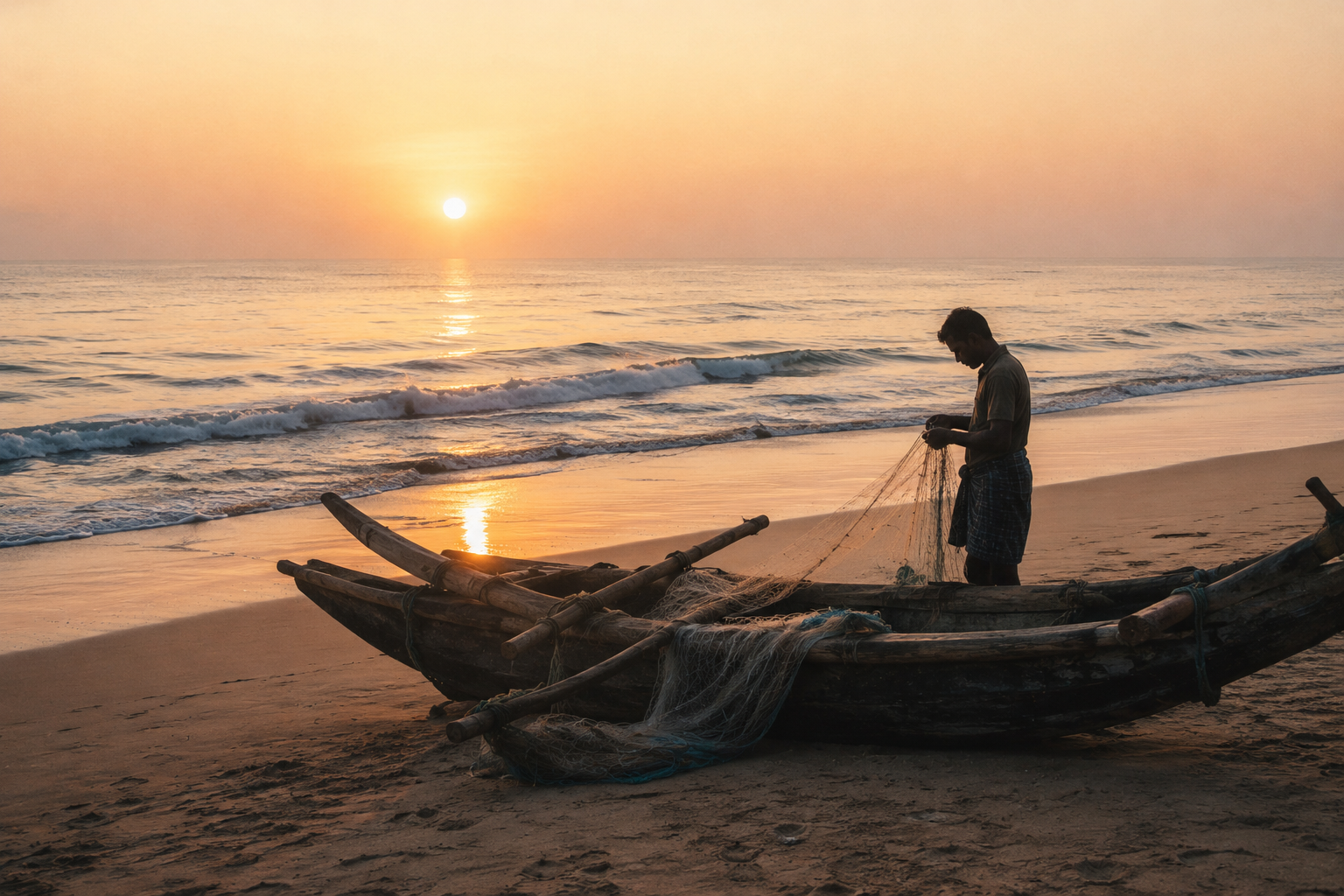
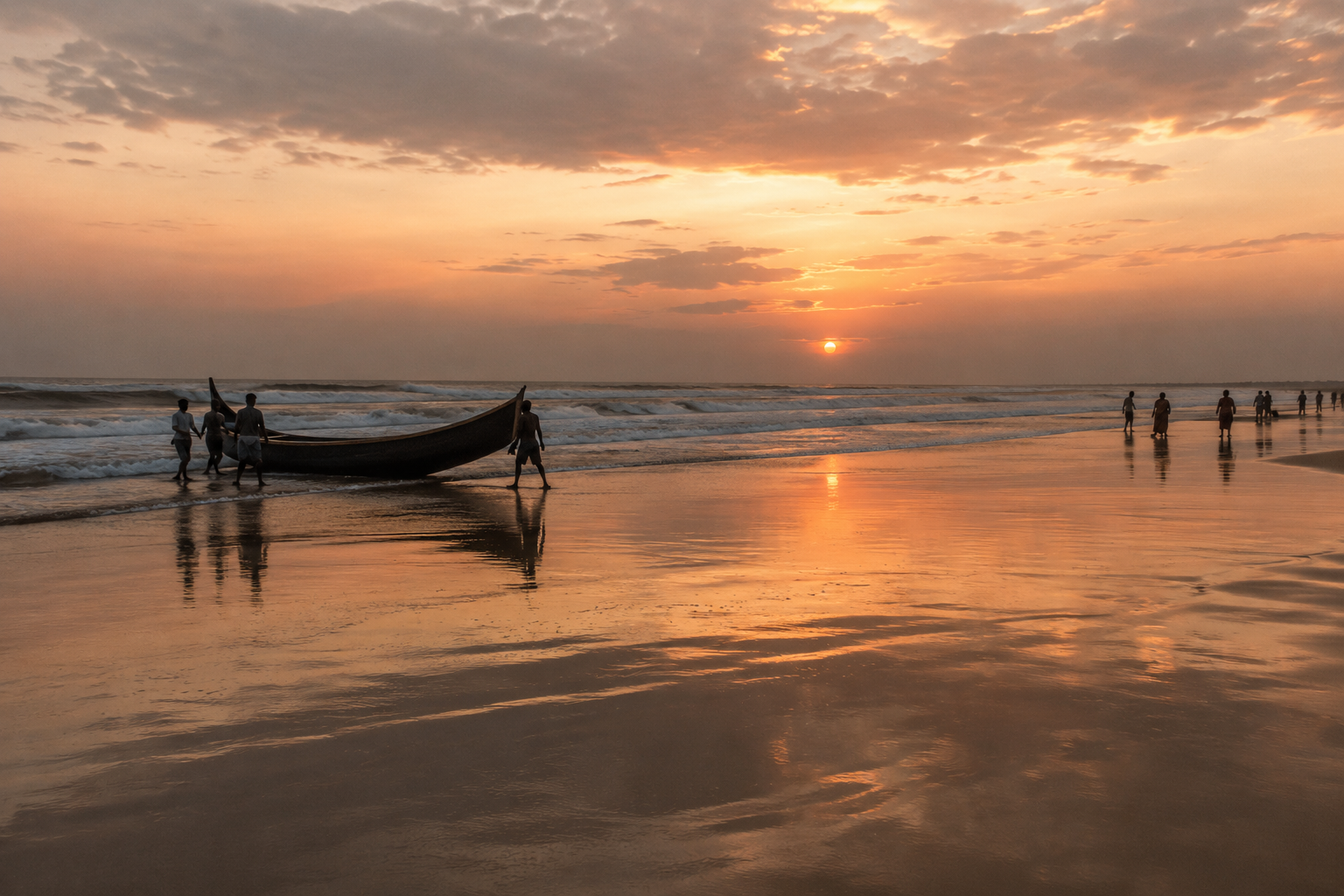
Before anything else, the sea. On this coast the day is handed over at the water's edge — the Bay of Bengal returning the light, one wave at a time.And then the thing that does not move. Nine centuries of cream-white stone, the brass wheel at its crown, and the flag changed by hand every evening — by a man who climbs the spire without a rope.
Nothing in Puri is in a hurry except the tide.
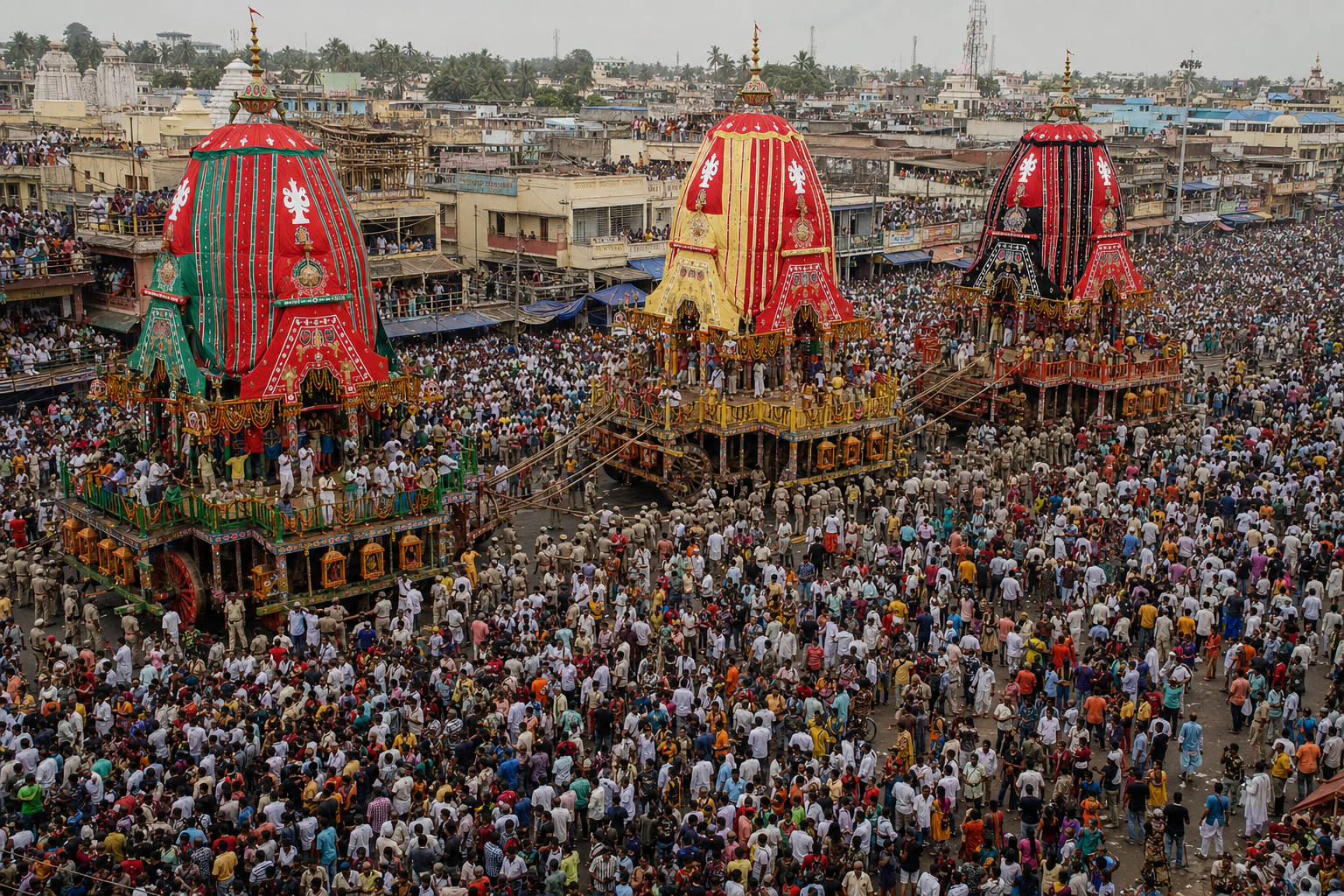
Between sea and sanctum runs the Grand Road — three kilometres built for gods to travel, and the rest of the year, for everyone else: the cycle-rickshaws, the conch-sellers, the slow river of feet.Once a year the arithmetic reverses. The gods leave the stone and ride out on three towering chariots, dragged by the hands of the crowd toward the water. The permanent, for a single afternoon, becomes a thing that moves.
Maybe that is the town's oldest lesson — that even what we build to last is happiest, once a year, being pulled down the road like everything else.
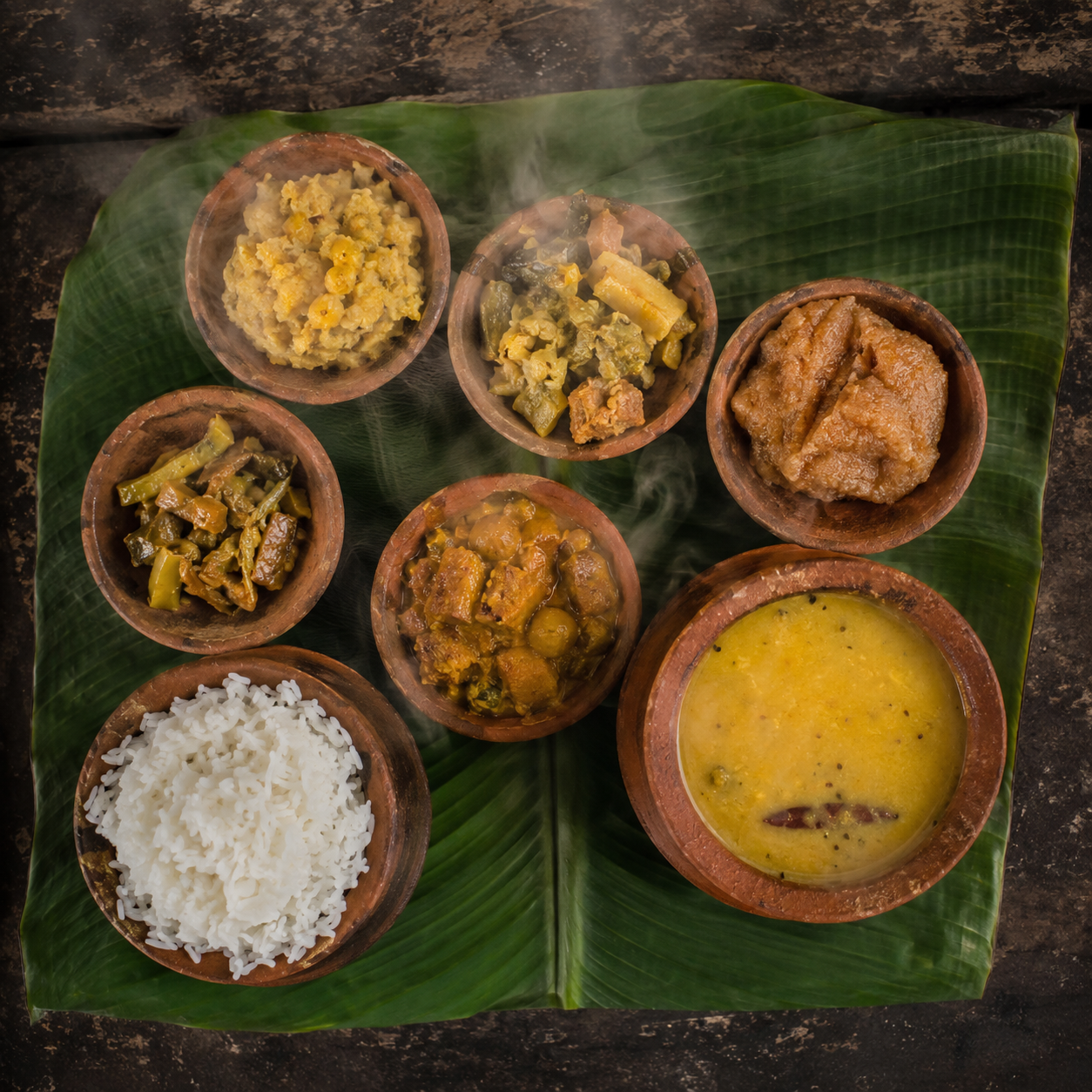
Faith you can eat. Rice and dal cooked in earthen pots stacked over a single fire and served on a leaf — the same meal, the same way, for longer than anyone can count.The shore keeps a second economy, older than tourism and indifferent to it. Wooden boats, mended nets, the morning's catch — the sea asked for a living rather than a blessing.
Permanence is just impermanence that hasn't finished yet.
By evening the flag is changed again, the crowds thin, and the water comes back up the sand to take the day. Tomorrow the stone will keep the same hour; the sea will not remember this one.
Two clocks, then. We tend to trust the one made of stone. But it is the other — the one that forgets — that the whole town walks down to meet, every morning, at the edge of the light.
The conversation
0 notes
No notes yet. Be the first to respond.
Sign in to join the conversation. Reactions don’t require an account.
New here? Just enter an email and a password — your account is created automatically.
The cost of intelligence is collapsing toward zero — and moving further out of reach. A data-driven essay on the gap between what AI promised and where it actually is.
Sign in to join the conversation. Reactions don’t require an account.
New here? Just enter an email and a password — your account is created automatically.